People of the Puszta
by David Auerbach
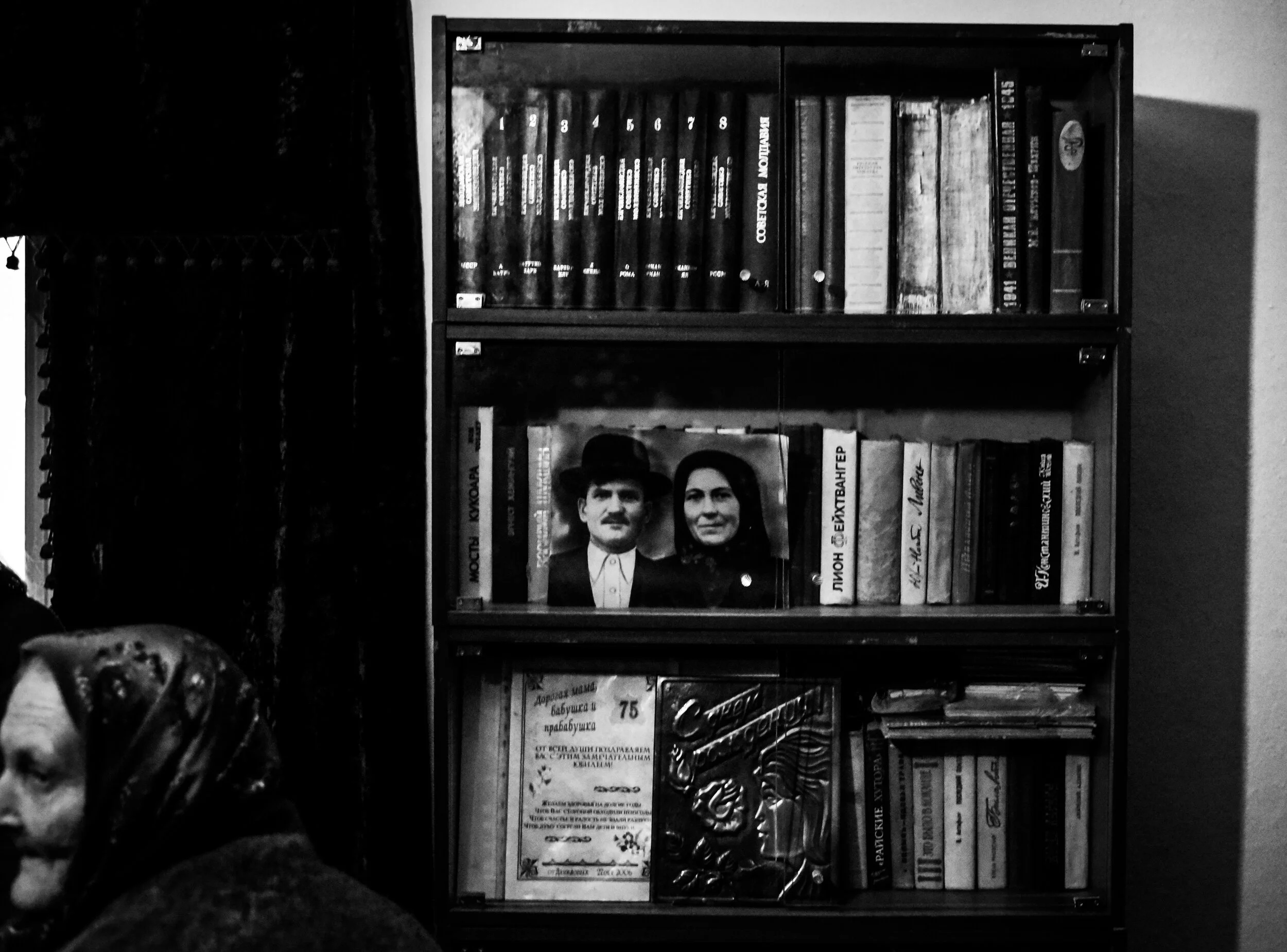
The puszta is the Hungarian term given to the Carpathian Basin, the vast steppe of southwestern Hungary: sprawling yet flat and empty.


War and Forgetting: On Sofia Andrukhovych's Amadoka (2020, The Old Lion Publishing House)
by Bohdana Neborak
At the Solovki prison camp, more than one thousand Ukrainian prisoners were executed between 27th October and 4th November 1937. How political persecution and mass murder on such a large scale was even possible remains a question.

XXX, je t'aime. (Please insert any city where you’ve lived.)
by Iryna Vikyrchak
Re-visiting the cities where you used to live, in reality, in is the most painful kind of tourism. Wherever you go, sooner or later your feet will betray you by taking the path they know, turning onto little streets they used to walk down and bring you on the familiar, yet forgotten routes.

A Translator
by Nina Kossman
I looked through old photos, I wrote to archives in Latvia and in Ukraine, and of course, I talked to my parents, but they were already very old and sick by then. That’s why, when, after a long and complicated correspondence, I was sent a manuscript of my great-grandfather’s memoir in German fro Latvia, I did not turn to my father for a translation…
Reading, Interrupted
by Justina Dobush
Something happened to me this year, even before the reality of the pandemic had sunk in. I lost myself, and that feeling of loss was so profound I thought I would never be able to feel like myself again.

A Life Spent on Short Wave
by Igor Pomerantsev
Translated from the Russian by Frank Williams
You have to be totally devoid of common sense not to believe in mystery. Mystery is there every step we take, literally under our noses. This is something every lathe operator who works with metal, every joiner who works with wood, every sculptor who works with hard, granular and liquid materials knows.

The fault in our books?
by Justina Dobush
Books have taught me to love everyone, to not allow thoughts of hate or revenge to corrupt my soul. Anyone who reads books knows that revenge is not an option, nor is violence, nor is supremacy of any kind.

A Holocaust
by Oleksandr Boichenko
Translated from the Ukrainian by Oleksandra Boychenko
Appelfeld’s novel “Katerina”, translated by Viktor Radutskyi and Ivan Bilyk, has thus far not gained a whole lot of publicity in Ukraine. Which is a pity: for what it is worth, the novel is written from the perspective of a Ukrainian village woman who saves Jewish children from other Ukrainian villagers.

Six degrees of separation
Translated from the Ukrainian by Oleksandra Boychenko
Long story short, 1968 was setting out to be perhaps the happiest year in the lives of all these extra-ordinary people, and the next one promised to be even better. However, one October night, having hung out at a dinner table in Slavic style, Komeda and Hlasko decided to take a walk around Beverly Hills. Nobody knows what exactly transpired that night; there was no one around. According to Hlasko’s fumbled testimony, he jokingly pushed Komeda in the shoulder and he suddenly disappeared in the darkness.

World War III
Translated from the Ukrainian by Oleksandra Boychenko
No, our European neighbors mostly do not consider us to be at fault and certainly do not justify Russia’s actions. But they are tired and they are scared. Unable to convince them that Putin is a good guy, the Kremlin propaganda is ever more successfully inoculating Westerners with the idea that Putin is bonkers and, if necessary, will indeed turn their ancient cities into radioactive dust. Thus, many of them, blushing internally, are ready to sacrifice Ukraine – in order not to provoke the aggressor too much.

read & write & bleed then cry
by Justina Dobush
I have known it since I was seven years old. I will be a writer, I am a writer, no matter what’s going on, literature is the only answer. Since then, I have written thousands of pages—fairy tales, diaries, poetry, prose, short stories, reportages, interviews, columns, book reviews and so on. Why haven’t I been able to finish any of the books which I so badly wanted to write?

Fight and Pride: Our Stonewall
by Lyosha Gorshkov
My past, or my imagined past if you will, was brutally erased overnight by the goblins of traditional values poisoning Russia with homosexual panic and the exploitation of its darkest servants: the Government, Law Enforcement, the Church and Propaganda.

BR(AVE TO)EXIT
by Giulia Medaglini
The name is Julia but not as in the English spelling. Pretty Woman came out when I was born but it was dubbed in my country, you know? Nyet. Not even Yulia. It’s spelled with the “G” of grit and the “I” of incomer. Like that. Sì.

Books & Depression. It’s easier than you think
It lasts for more than a year: I can't read, that is, I can, but I don't want to. My appetite is already gone halfway into the book. I count every page I have read and still need to read. I can't wait for the count to show 0. Books surround me everywhere: they are my job, and without them, I am nobody. I feel like an old, impotent man among many beautiful women, none of whom he can fuck.

The benefit of reading is like oxygen. You cannot smell it but you will suffocate without it.
by Justina Dobush
Translated from the Ukrainian by Yulia Lyubka
You read and read and read. You love some and you love others. Žižek says not to love the new hysterical left, Peterson says to love yourself, not to love feminists or the same new hysterical left. The New York Times says to read about people's rights, Trump says to read Twitter, Putin says not to read anything at all. Zuckerberg tells Cambridge Analytica to read other people’s messages, Islamists say to read the Quran, the Ministry of Justice doesn't read the constitution, the younger generation reads only Telegram and Instagram.

Almost Like in the Story
by Artem Cheh
Translated from the Ukrainian by Olena Jennings and Oksana Lutsyshyna
“Val, this louse, is sitting at the third line of defense, calling his wife and rambling on about how he was picking the guts of his friends off the ground.” My commander was telling the story about one of the soldiers with despair in his voice. He nearly shouted.

Drunk and sober reflections on reading
by Justina Dobush
Translated from the Ukrainian by Yulia Lyubka
What is left with us after we have read a book? Is it a memory without any practical appliance, names and dates, stories you will never become a part of or ideas you will never think of? Books are the infinity of human lives, which crave for being remembered. It is the only possible way to preserve every second and each personality in its incredibility.

La La On My Retina
by Billie Hanne
When we are touched we are moved. Silence emerges, blooms, but, as in Nature so in us, silence can only last for a second. Then we have to speak, do, move. And thus we make, create, take action to be with, to participate in, yet to not disturb the vision that we are presented with. We do what we can to hold onto and deepen our experience of the moment that grasps our attention. We open our heart as wide as we can to receive its mystic content. We bare what we are able to. One person only a bit stronger than the next.

How to Become a Body
by Evan Steuber
Look in the mirror and see how your eyes will frame age and time. Death is the most obvious beginning. We dress up a corpse to convince ourselves this is a person. Still, if the corpse can be forgotten, death is also the easiest way to avoid the fate of the material. Existent only in memory, the deceased is perfectly singular.